The Painting
Built on Precision
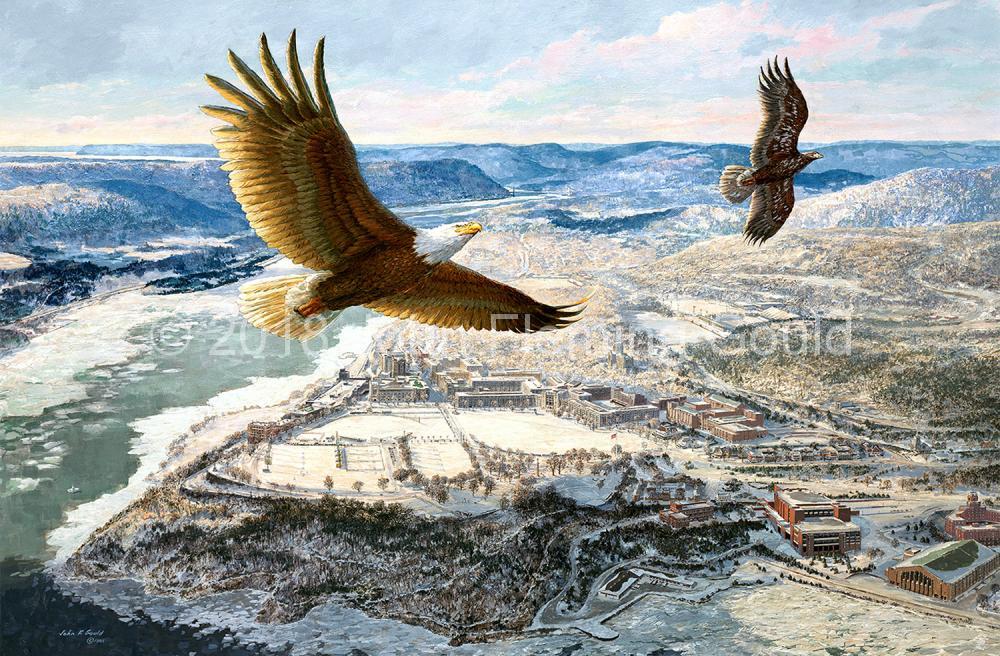
In 1985, John F. Gould painted Eagles Over West Point, a bold image of an eagle in flight above the United States Military Academy on the Hudson River. It became one of his most recognized works. And like everything Gould made, it started with research.
To get the landscape right, Gould chartered a helicopter twice: once in fall, once in winter, studying how the light and terrain shifted between seasons before settling on the composition. Then he traveled to Albany to photograph captive eagles up close, studying wingspan, feather detail, and posture. Every element in the final painting, from the light posts on campus to the curve of the river below, was grounded in direct observation.
That commitment to accuracy was nothing new. It was how Gould worked for seven decades, whether the subject was a Saturday Evening Post illustration, a General Electric commission, or a scene from the American Revolution. He read everything he could about a subject before he picked up a brush. He wanted to understand it, not just depict it.